TRENDSPOTTER – Castle Hedingham Pottery
Martin Millard explores the enduring charm of this distinctive collecting field
18/02/2026 Ceramics & Glass
Tucked away in the Essex countryside, the small town of Castle Hedingham was once home to one of England’s most characterful pottery traditions.
In 1837, the Bingham family of potters settled there on leaving London, drawn by the area’s exceptional local clay. It was Edward Bingham, the second Edward in a line of three, who would transform the family’s practical country pottery into something altogether more distinctive.
Originally producing functional earthenware for everyday use, Bingham began experimenting with more artistic designs in the 1860s. The result was Hedingham Ware: pottery inspired by medieval and Tudor forms, made on the very soil that had produced ceramics centuries earlier. These pieces dovetailed perfectly with the spirit of the Arts & Crafts movement, offering a romantic revival of early English craftsmanship in reaction to Victorian industrialisation.
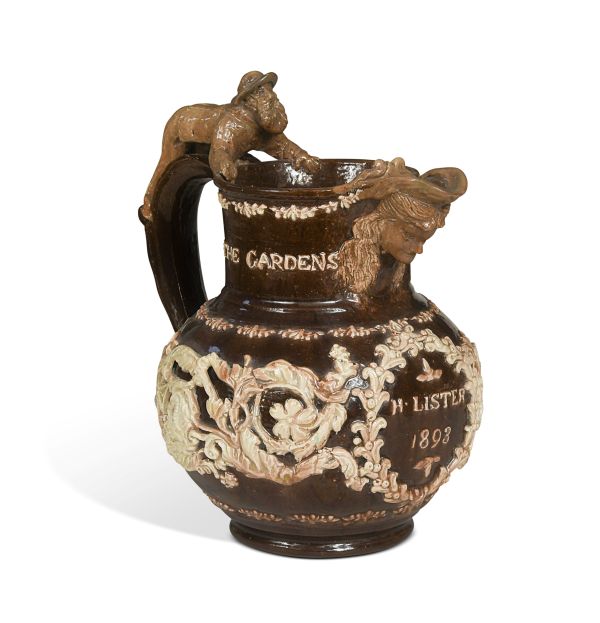
Lot 38 – A rare, commissioned jug made for Frances Evelyn Maynard, dated 1893. Decorated in brown lustre with birds and foliage, the handle formed as the Countess’ gardener, and inscribed “May the Gardens of Easton Lodge Flourish!” Estimate: £200–£400.
Harking back to medieval traditions, these pieces tend to be identifiable by their early English motifs such as oak leaves, figural handles and initials, and created in the forms of tankards, jugs, chargers or vases. Many were also created by Edward Bingham with 17th century dates, to further increase their sense of being from early England. Usually glazed in greens, blues and browns, Castle Hedingham works typically took functional forms but were treated with a more decorative emphasis than much of the rest of contemporary pottery of the period.
The joy of these pieces is that they can be bought for a few hundred pounds but look as if they could be original Medieval or Tudor pieces. Ideal on an oak dresser, Castle Hedingham pottery can give the look of medieval pieces but at 20th century prices. Much of Castle Hedingham pottery is now rare, as it was only created over a short period by the Bingham family, before the company would go on to be sold to Hexter, Humpherson & Co in 1901, and traded briefly as “Essex Art Pottery” before closing in 1905.
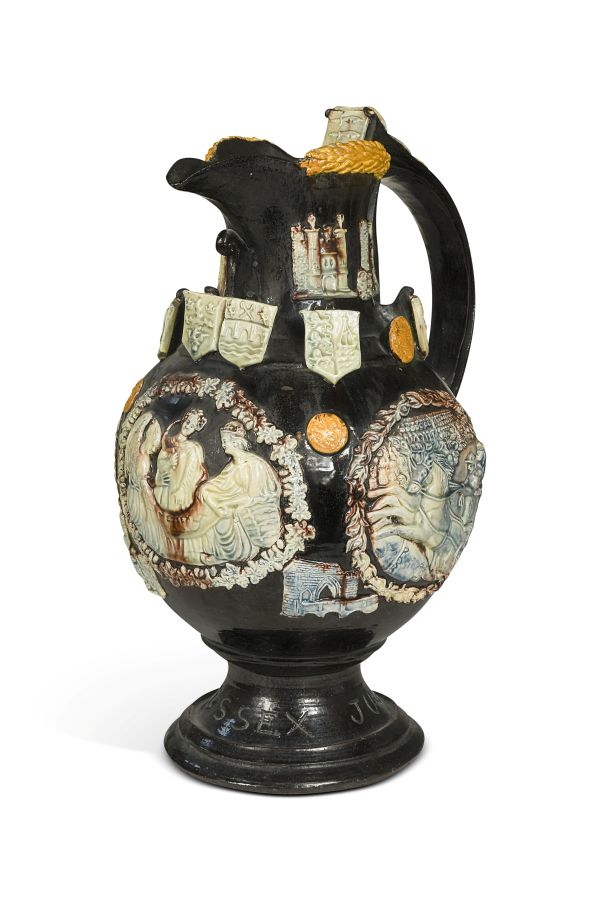
Lot 43 – ‘The Essex Jug’, decorated with panels of Essex scenes, shields and ears of wheat. Estimate: £120–£180.
Identifiable by a lozenge shape or a ‘keep’ mark paired with Edward Bingham’s signature impressed into the base, the best examples of Hedingham Ware tend to be worth a few hundred pounds, however, prices appear to be rising. The current trend for early English or Medieval style motifs has been well-documented, appearing in both fashion and interior design, and this has helped to bolster the popularity of a variety of different items at auction. It’s buoyed the demand for heavy English oak furniture, tapestries, early portraits and smaller decorative items which can create aspects of early English romanticism on dressers, shelves and walls across the country.
At the Art & Design Sale on 26th February, we will be offering a large selection of Hedingham Ware, consigned from a private Lincolnshire collection. With twenty lots going under the hammer, the estimates range from around £50 to £400. This is a real collectors market, and we expect to see some of the ceramics specialists taking a real interest in these pieces, however the look is something which is becoming more mainstream, so I wouldn’t be surprised if we were to see some more general buyers looking at these items, perhaps to fit with a particularly eclectic or historic interior design project.
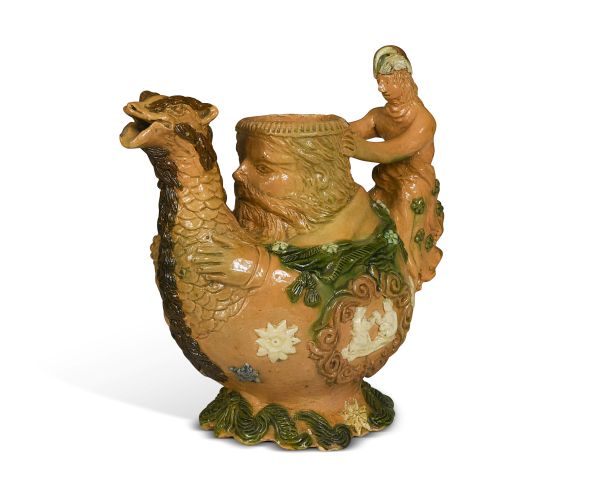
Lot 37 – A wonderfully eccentric figural teapot, with a classical figure handle, a bearded mask aperture and a mythical beast spout.
Highlights include:
- Lot 38 – A rare, commissioned jug made for Frances Evelyn Maynard, dated 1893. Decorated in brown lustre with birds and foliage, the handle formed as the Countess’ gardener, and inscribed “May the Gardens of Easton Lodge Flourish!” Estimate: £200–£400.
- Lot 43 – ‘The Essex Jug’, decorated with panels of Essex scenes, shields and ears of wheat. Estimate: £120–£180.
- Lot 37 – A wonderfully eccentric figural teapot, with a classical figure handle, a bearded mask aperture and a mythical beast spout.
With such variety in both scale and decoration, this collection offers a fascinating snapshot of Bingham’s creativity. It also presents a chance to secure pieces that sit beautifully within both historic and eclectic modern interiors.
Castle Hedingham pottery is a true collector’s market, but with its bold forms and romantic medieval character, it is increasingly capturing the imagination of a wider audience. We look forward to seeing where the bidding leads.
View the Castle Hedingham pottery in the Art & Design Sale here