TRENDSPOTTER - Dogs in Art
Patricia Cross on why man’s best friend has long been one of the art world’s most painted subjects
11/03/2026 Paintings, Drawings & Prints
If you ever needed proof that dogs occupy a very special place in the British psyche, you only had to look at the recent success of the Portraits of Dogs exhibition at the Wallace Collection. The show drew huge crowds and featured many beloved canine portraits, including works by Sir Edwin Landseer. It was a wonderful reminder that our national love of dogs isn’t just a modern phenomenon – it has been reflected in art for centuries.
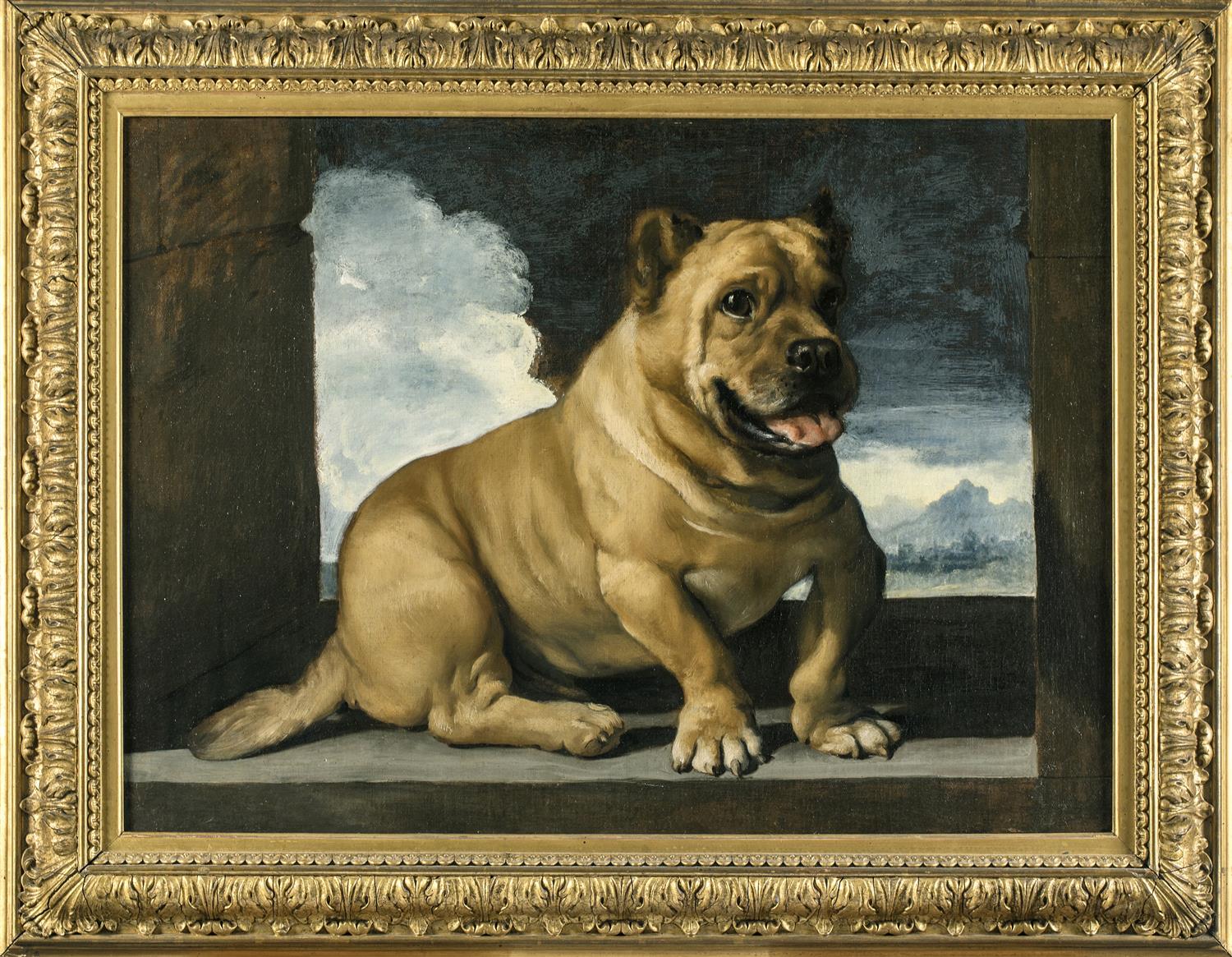
Cane Corso by Giovanni Francesco Barbieri, which Cheffins sold in 2018 for £570,000
Dogs have appeared in art for thousands of years, stretching back as far as ancient Egyptian civilisation. As our relationship with them evolved, so too did the way they were depicted. In the Middle Ages they were often shown in hunting scenes, emphasising their working role alongside humans. By the Renaissance, dogs had taken on a more symbolic meaning, representing loyalty, guidance and protection. Later, during the Georgian period, they frequently appeared in portraits – sometimes alongside their owners and sometimes as the stars of the show in their own right.
Many great artists have been drawn to painting dogs. Among the best known are John Wootton, George Stubbs, Sir Edwin Landseer and the remarkable female artist Maud Earl. Landseer in particular became hugely popular in the 19th century and was a favourite of Queen Victoria. He painted the Queen’s dogs alongside members of the royal family and also produced a touching portrait of her beloved spaniel, Dash. One of his most famous canine portraits, however, is the Newfoundland known as ‘Bob’, painted under the title A Distinguished Member of the Humane Society. Bob earned his place in history by rescuing people from drowning in the Thames – and was rewarded with a medal and access to food at the Society’s premises.
Wonderful depictions of dogs in art continue to capture people’s imagination today. Collectors and viewers alike are often drawn to them because, when painted well, they convey so much personality.
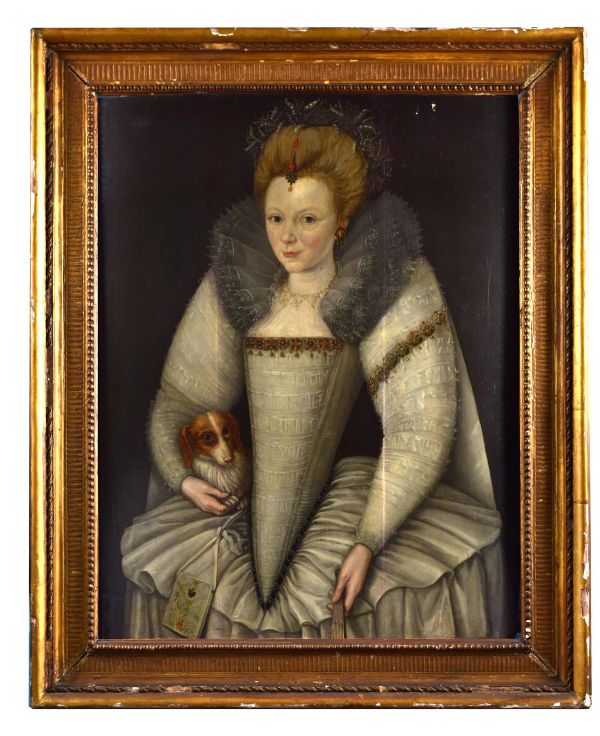
Elizabethan portrait of a lady with her small spaniel beside her sold for £54,000 at Cheffins
Over the years at Cheffins we have been lucky enough to handle some fascinating examples. One of the most memorable was a portrait of a Cane Corso by Giovanni Francesco Barbieri, which we sold in 2018 for £570,000, pictured above. Painted in the 17th century, the work is a striking and very faithful depiction of the breed as it existed at the time. The dog’s distinctive head and physical characteristics were recognised by both the Kennel Club of Great Britain and the Ente Nazionale della Cinofilia Italiana as identifying the animal as the historic Cane Corso – the ancestor of today’s Italian Mastiff. These powerful dogs were admired by the Romans for their courage, nobility and strength, and they are still used for hunting and guarding today.
Dogs also appear frequently in portraits as symbols of loyalty and fidelity. Throughout the centuries, patrons often chose to be depicted with their lap dogs, celebrating not only their affection for their pets but also the virtues those animals represented. In March 2018 we sold a charming Elizabethan portrait of a lady with her small spaniel beside her, which achieved £54,000, pictured above. The little dog adds warmth and intimacy to the composition while also reinforcing that enduring message of devotion.
Royal portraiture provides another rich source of canine imagery. A particularly famous example is Anthony van Dyck’s portrait The Three Eldest Children of Charles I, painted in 1635–36 and now hanging at Windsor Castle. The young royals are accompanied by two King Charles spaniels, whose presence brings a lively and affectionate dimension to the painting. A vibrant study of a spaniel by an artist from Van Dyck’s circle (lot 122) will appear in our forthcoming March Fine Sale, estimated at £1,200 - £1,800.
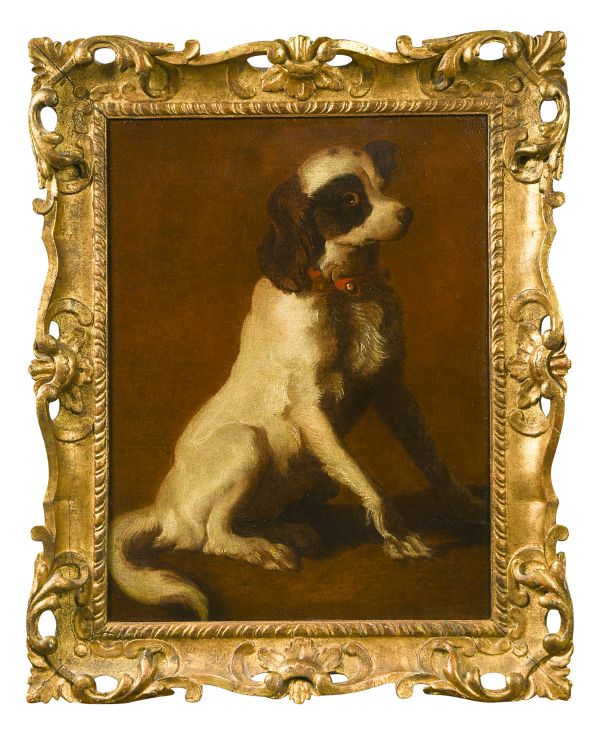
Study of a spaniel by an artist from Van Dyck’s circle (lot 122) available at the March Fine Sale, estimated at £1,200 - £1,800.
Dogs are also central to many sporting pictures – an area we are fortunate to handle regularly at Cheffins. We hosted a dedicated sporting art sale in 2020, which saw some fantastic prices paid for works by the likes of Peter Tillemans, Francis Sartorious, John Wootton, Thomas Spencer and John Nost Sartorious. Sporting art often captures the incredible energy and discipline of working dogs. Sometimes they are shown in full pursuit, as in Samuel Raven’s pair of hunting scenes including Belvoir hounds, which we sold in 2021 for £4,200. At other times they appear quietly attentive, waiting for their master’s signal, such as the pack depicted in Sir Alfred Munnings’s Huntsman and Hounds, November Morning which sold for £70,000 in 2021.
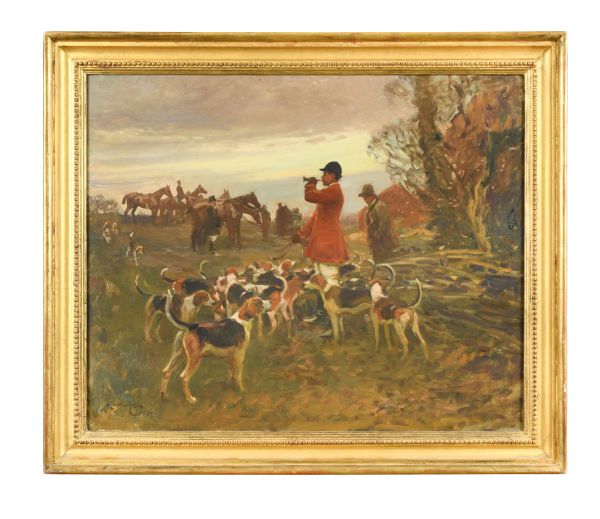
Sir Alfred Munnings’s Huntsman and Hounds, November Morning which sold at Cheffins for £70,000 in 2021
Whether portrayed as faithful companions, loyal symbols or spirited working animals, dogs have long held a special place in art – and judging by the enthusiasm of collectors and exhibition visitors alike, they are likely to continue doing so for many years to come.
There will be a number of paintings featuring dogs in the next Fine Sale at Cheffins on 25th March. To view the catalogue when it comes available, please click here