Jewellery Editor, Jessica Diamond, reveals why buying jewellery at auction is trending
Watch and Jewellery Director at The Sunday Times Style and The Times Luxx, Jessica Diamond, explains why buying jewellery at auction is having a moment
14/04/2026 Jewellery
As a jewellery editor I’ve travelled all over the world. I’ve seen collections launched in far flung places, I’ve visited mines, workshops and design studios and seen and handled countless (read, thousands) of pieces. One of the things I’m often asked is, “do you own lots of jewellery?”. I’ll pass on that one, but this I will say: for everything that I’ve seen and all the opportunities that I’ve had, the best place to buy a special jewel that’s within easy reach of owning, is an auction house.
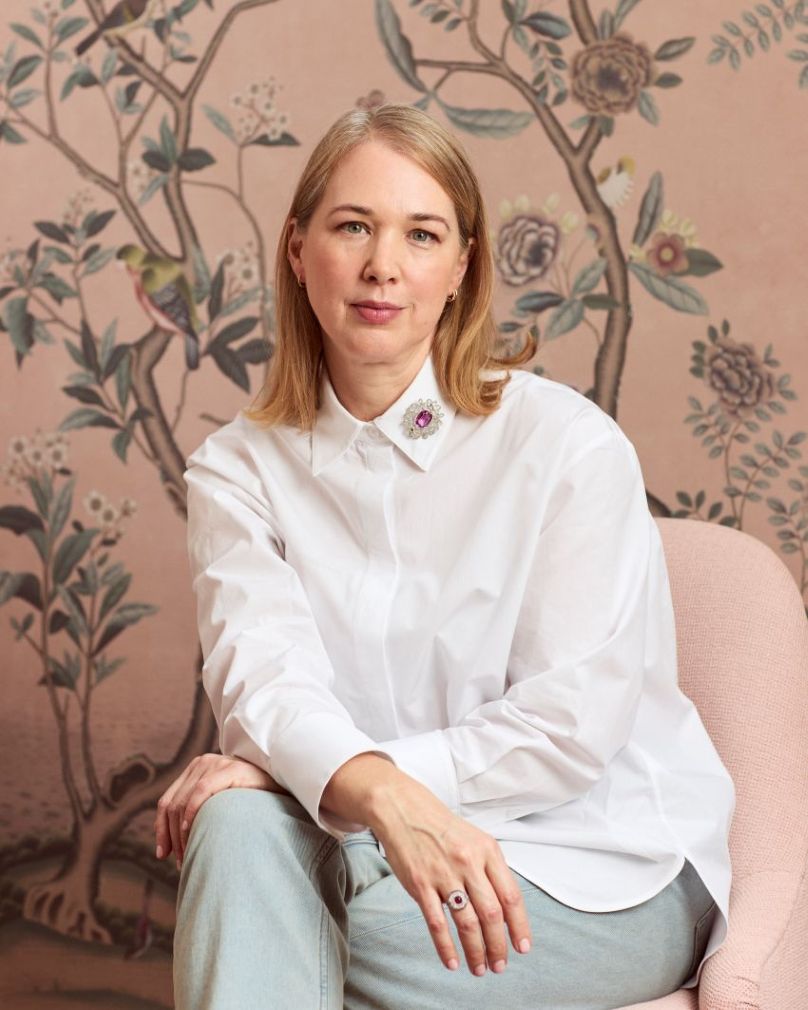
Jessica Diamond wears lots 219 and 213, photographed at Duke's Hotel, London
Reasons are multiple. And in no particular order, first is sustainability. We are bombarded by the ‘S’ word these days and it’s often overused. The jewellery world is particularly obsessed with it, because the mining of gold and gemstones is historically problematic and still fraught with issues in some cases. The advent of lab-grown diamonds has particularly highlighted the case for the ‘sustainable’ creation of them, although note my inverted commas – many are grown using polluting fossil fuels to power the process. Recycled gold is similarly trumpeted as the eco alternative – but its provenance and origin can be sketchy too. And so, it makes total sense that the most sustainable, eco-friendly jewel is the one that’s already been made. Like pre-loved clothing or second-hand furniture, a pre-owned, vintage or antique jewel is the ultimate in recycling.
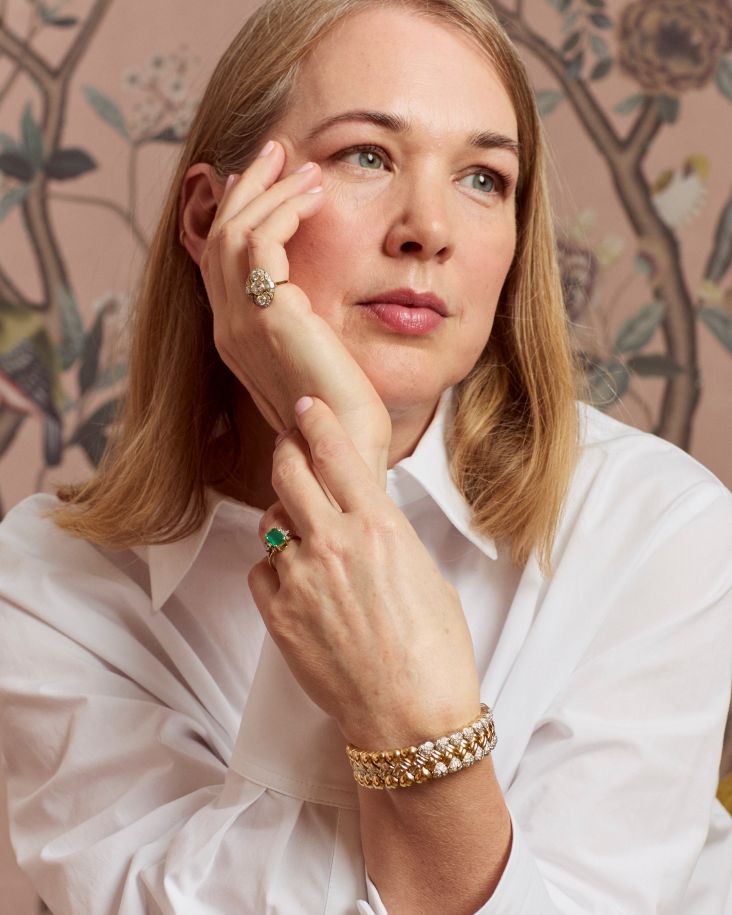
Jessica Diamond wears lots 203, 198 and 168, photographed at Duke's Hotel, London
So, what does that mean for the edit that’s on offer? As it turns out, everything, and while trends come and go and fashion is fleeting, jewellery has a knack for swerving fads with styles like Art Deco, Belle Epoque, Georgian, Victorian (I could go on) enduring well beyond their eponymous era. Take the former: Art Deco is over a hundred years old but its linear, bold, architectural style looks as fresh today as it did a century ago. I can think of several contemporary designers who riff solely on this aesthetic. A quick browse through this catalogue and some beautiful, pure, original examples are offered – like the octagonal ruby and diamond ring (lot 219 on page 51). As per the lab report the central stone is 1.7cts of unheated Burmese ruby surrounded by a pave of diamonds and calibre cut rubies. I’m telling you, for an estimate of £3,000-£5,000, it does not get any better.
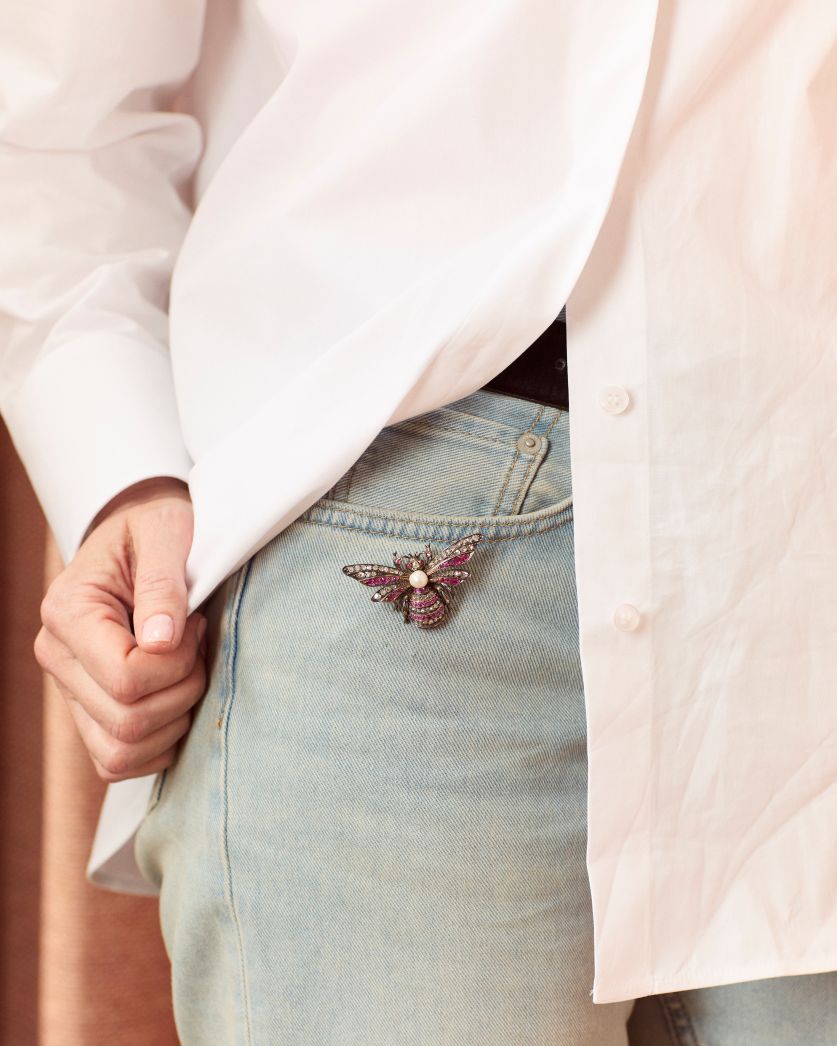
Jessica Diamond styles lot 34 on denim jeans, photographed at Duke's Hotel, London
Which leads neatly on to value. Jewellery is a luxury, not an essential (even I admit that, reluctantly) and the world is going through crashing instability at the moment. Budgets are being stretched and purchases are being considered. Add in the cost of gold right now – it’s gone up by over 40% in the last year – and suddenly jewellery seems out of reach. Except not. Jewellery that’s pre-loved will always be priced lower than buying the equivalent new. It’s simply much more cost-effective than buying at retail where prices are inflated by a myriad of other factors such as packaging, marketing or the perceived weight of a big brand name.
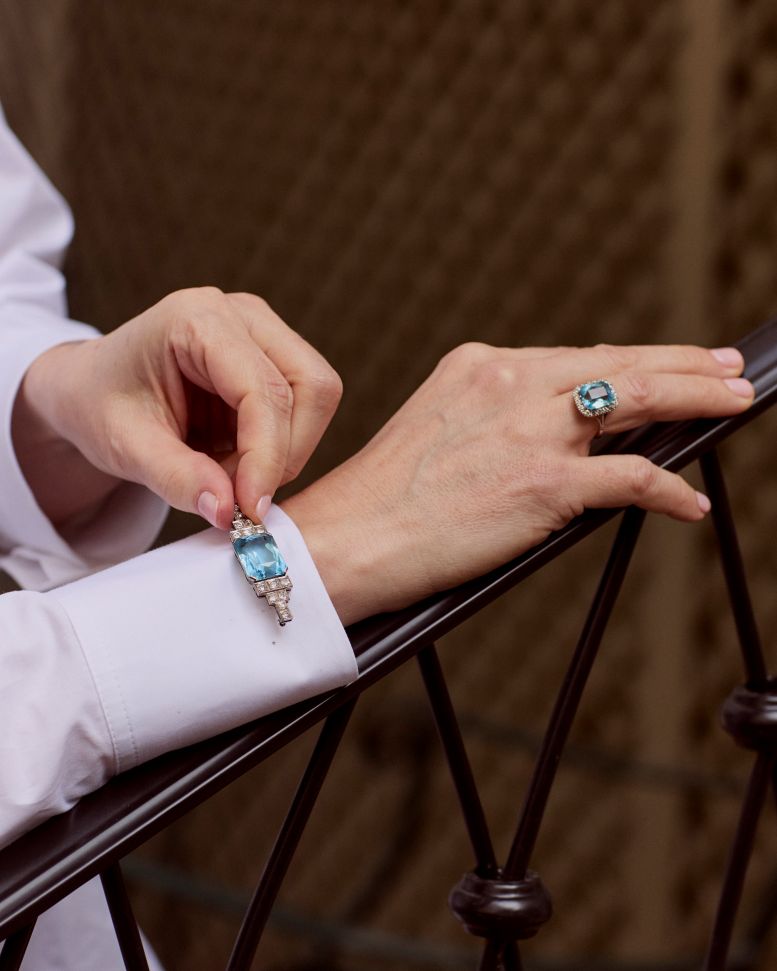
Jessica Diamond styles lots 141 and 140, photographed at Duke's Hotel, London
Tied into the idea of value comes craftsmanship. Today our highstreets and luxury shopping thoroughfares are flooded with mass-produced jewellery. Buying a unique, one-off jewel is possible, but you either need incredibly deep pockets to afford a major brand’s high jewellery offering (comprised entirely of unique one-off pieces with prices that easily start at six figures) or you’ll need to commission an independent jeweller/maker. It's a lovely experience, granted, but you’ll need a healthy budget, an idea of what you want, time to brief them (and time to wait for it to be finished) and the confidence and knowledge to know who and how to ask. It’s exhausting. Browse an auction catalogue and so much of the inventory will be one-off pieces made by the abundance of small workshops and makers that sadly don’t exist anymore. Take the early 20th century pink topaz and diamond brooch (lot 213 on page 45) as the perfect example; aside from the gorgeousness of the estimated over 14 carat central stone, the diamond set surround is a ribbon-like swirl of platinum that threads in and around in a continual artistic loop. The amount of skill and time needed to make it today would mean it would be incredibly expensive, while at auction the estimate is £2000-£4000. It’s a no brainer.
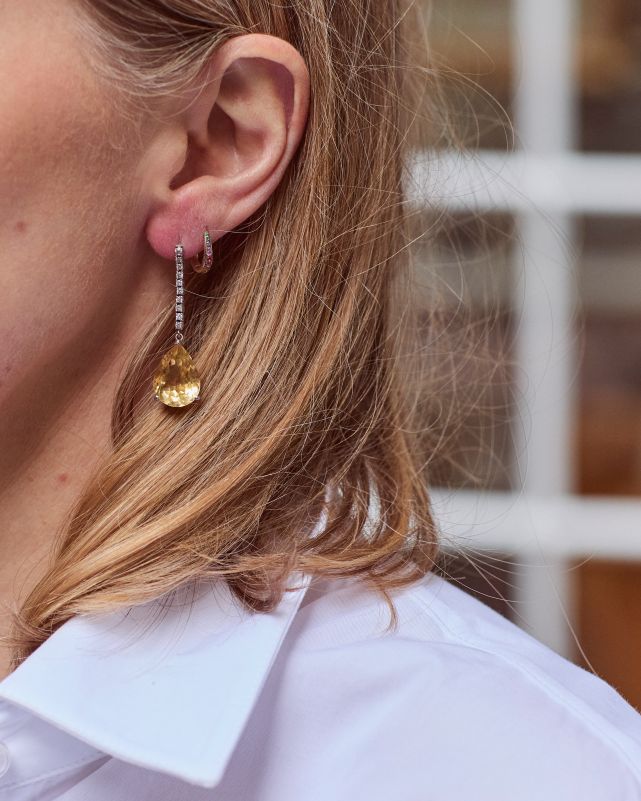
Lot 27 styled by Jessica Diamond, photographed at Duke's Hotel, London
The whole proposition of buying at auction upends the idea of what luxury is today. In my mind it’s a moniker that’s over-used and one that has in many ways become meaningless – after all if something is available to the masses – as much ‘luxury’ is, how can it be special. At auction the chance of finding a beautifully made, singular jewel is high. The idea that you can own something that’s been made with immense skill and that no one else will own is surely the very definition of luxury. The fact that there’s a bargain to be had only adds to the appeal. So go forth and browse, and then have a go – find your jewel, set your sights on it and then enjoy the thrill of the chase. Happy shopping.
To view the full catalogue and collaboration, please click here